
In This Article
A high back chair with headrest for tall people is an ergonomic seat built with a taller backrest, an adjustable or integrated head support, and a generous seat-height range. It supports long torsos and long legs from the lumbar curve all the way up to the base of the skull.

If you’ve ever leaned back in a standard office chair and felt the backrest quit around your shoulder blades, you already know the problem. The chair isn’t broken. You’re just bigger than the person it was designed around. Your knees float above the seat, your thighs overhang a cushion built for shorter legs, and your head, the heaviest part of your upper body, dangles with nothing behind it. By mid-afternoon, your neck is filing a formal complaint.
That’s the real case for a high back chair with headrest for tall people. It’s not luxury. It’s geometry. OSHA’s guidance on workstation chairs describes a well-designed, properly adjusted chair as an essential part of a safe and productive computer setup. “Properly adjusted” is doing heavy lifting for anyone over six feet, because a chair can only adjust within the range its maker built in.
This guide does the homework so you don’t have to. Based on published specs, ergonomic standards, and aggregated buyer sentiment, we narrowed the field to seven real chairs across budget, mid-range, and premium tiers. Along the way we’ll dig into backrest height, upper back support, the adjustable seat height range you actually need, and what makes a tall ergonomic chair with extended backrest worth the money. We’ll also cover how to choose a high back chair for long work hours without wrecking your spine. Think of it as a tailor’s fitting for your desk.
One note on method: prices below are ranges, never exact figures, because they shift constantly. Review insights are aggregated sentiment from published sources, and where I couldn’t verify something, I’ll say so.
Quick Comparison: 7 Top Picks at a Glance
Before the deep dives, here’s the lineup side by side. Every chair here pairs a tall back with some form of head support, but they solve the problem in very different ways.
| Chair | Standout Feature | Key Spec | Weight Capacity | Price Tier | Best For |
|---|---|---|---|---|---|
| GTPLAYER Big and Tall Gaming Chair | 30.31″ backrest plus footrest | 150° recline, pocket-spring lumbar | 400 lb | Budget to mid | Tall WFH-and-gaming hybrids |
| GABRYLLY Ergonomic Office Chair | Massive review base | Flip-up arms, 90-120° tilt lock | 300 lb | Budget | Tall buyers on a tight budget |
| CAPOT Ergonomic Mesh Office Chair | 3D headrest, 8-level lumbar | 4D flip-up arms | 400 lb | Budget to mid | Fine-tuners who love adjustments |
| SIHOO M18 Ergonomic Office Chair | Adjustable headrest and lumbar | 17.9″ seat depth, 2D arms | 330 lb | Mid-range | Tall buyers with average-length thighs |
| Flash Furniture HERCULES GO2078 | Extended upper back, integrated headrest | Fabric, built-in lumbar | 500 lb | Mid-range | Heavier, taller sitters |
| Eurotech Ergohuman Mesh with Headrest | Backrest up to 30.5″ | Breathable mesh | Confirm per config | Premium | Hot sleepers and all-day mesh fans |
| Humanscale Freedom with Headrest | Backrest up to 32″ | Premium build | Confirm per config | Premium | Splurge-worthy lumbar and height |
Looking at the table, GABRYLLY and GTPLAYER are the value anchors, but they chase different priorities: review volume versus raw backrest height. If upper body coverage is your top concern, the Humanscale Freedom and Ergohuman top out the list, though their premium tier means you’re paying for it. Heavier tall buyers should note that Flash Furniture HERCULES GO2078 posts the highest listed capacity of the group at 500 pounds.
💬 Just one click — help others make better buying decisions too!😊
Top 7 High Back Chairs With Headrests for Tall People: Expert Analysis
Each pick below translates the spec sheet into what it means for a long frame, then weighs it against real buyer sentiment.
1. GTPLAYER Big and Tall Gaming Chair — 30-inch backrest on a budget
The headline number is the backrest: roughly 30.31 inches, tall enough to reach a long torso instead of ending at the ribs. The listing pairs it with a 400-pound capacity, an included footrest, a 150-degree recline, and pocket-spring lumbar support. In practice, that tall back plus pocket springs keeps upper back support continuous from beltline to shoulder blades. The footrest is the quiet hero for long-legged sitters who recline, since it gives your calves somewhere to rest.
Based on the spec comparison, this suits tall buyers who split their day between work and play and don’t mind a bolder silhouette. The trade-off is the racing-seat shape. Bolstered sides can feel snug on broad shoulders, and gaming-style head support is often a pillow rather than a true adjustable headrest, so confirm that detail on the current listing.
In the roundup I found, the chair carries roughly a 4.5-star rating. I couldn’t independently verify a deep review pool, so treat that as directional.
Pros:
- ✅ Very tall 30-inch backrest for long torsos
- ✅ 400 lb capacity suggests a sturdy frame
- ✅ Footrest included for reclined sitting
Cons:
- ❌ Gaming styling won’t suit every office
- ❌ Head support may be pillow-style, not adjustable
Price: typically in the budget-to-mid band, commonly around $150-$250 for this category; check current price. Strong value if backrest height is your priority.

2. GABRYLLY Ergonomic Office Chair — most-reviewed budget mesh pick
Social proof is this chair’s calling card. One roundup cites more than 14,500 reviews averaging about 4.4 stars, a sample big enough that one-off lemons tend to wash out. The spec list reads like a practical shopping checklist: high-back mesh, a headrest, flip-up arms, a wide cushion, a 90-120° tilt lock, and a 300-pound capacity.
Here’s what those mean in daily use. Flip-up arms let you slide closer to the desk without the armrests colliding with the edge. The tilt lock lets you pin an upright 90° for typing, then unlock it to lean back when you’re thinking. The wide cushion helps larger thighs feel supported rather than squeezed.
The catch is the 300-pound ceiling, which sits below the 400-pound rivals here. Heavier tall buyers should look elsewhere. I couldn’t verify specific recurring complaints, so rather than invent any, I’d suggest scanning the three-star reviews for comments on seat depth, the dimension tall shoppers care about most.
Pros:
- ✅ Huge review base signals reliability
- ✅ Flip-up arms tuck neatly under desks
- ✅ Tilt lock fixes your posture for typing
Cons:
- ❌ 300 lb capacity limits heavier users
- ❌ Seat depth worth double-checking for long thighs
Price: budget tier, check current price. Excellent value for a first proper chair.
3. CAPOT Ergonomic Mesh Office Chair — best adjustable headrest at its price
Where many budget chairs treat the headrest as a decorative afterthought, CAPOT leans into it. The listing highlights a 3D headrest, 8-level lumbar adjustment, 4D flip-up arms, a 3-level tilt backrest, PU wheels, and a 400-pound capacity.
Translated: a 3D headrest typically moves in more than one direction, so you can set height, angle, and depth to match your neck rather than the manufacturer’s average. Eight lumbar levels matter because a taller torso puts your lower curve in a different spot than the default. The 4D arms add height, depth, width, and pivot adjustment, which is how you keep shoulders relaxed at a desk that was never designed for you. PU wheels roll quietly across hard floors.
My take: this is the tinkerer’s choice. If you enjoy dialing in a chair until it disappears beneath you, CAPOT gives you more knobs per dollar than most. If you hate fiddling, simpler might serve you better.
A roundup names it the best adjustable-headrest option in its group. I couldn’t verify an independent aggregate rating.
Pros:
- ✅ 3D headrest adapts to different neck angles
- ✅ Eight lumbar levels for longer torsos
- ✅ 4D arms and 400 lb capacity
Cons:
- ❌ Many adjustments mean a learning curve
- ❌ Brand has less track record than established names
Price: budget-to-mid tier, check current price. Feature-per-dollar champion.
4. SIHOO M18 Ergonomic Office Chair — adjustable headrest with a solid 4.4 rating
The SIHOO M18 offers a high-back mesh design with an adjustable headrest and lumbar support, 2D armrests, a wide cushion, a tilt lock, and a 330-pound capacity. A retail listing shows a 4.4-star rating, which lands it comfortably in “buyers generally approve” territory.
The spec that deserves scrutiny is the 17.9-inch seat depth. That’s modest. If you have long thighs, the front edge may end before your legs do, leaving the back of your knees unsupported. For comparison, the Autonomous ErgoChair Core lists an 18-20.5 inch depth range. Taller buyers with proportionally shorter femurs may be perfectly happy here, while long-legged six-and-a-half-footers might feel perched.
The 2D armrests are another honest limitation. They adjust in fewer directions than the 4D arms on the CAPOT, so desk-height matching is less precise.
Pros:
- ✅ Adjustable headrest and lumbar support
- ✅ Breathable mesh for warm rooms
- ✅ Tilt lock for fixed upright typing
Cons:
- ❌ 17.9″ seat depth may feel short for long thighs
- ❌ 2D armrests limit fine-tuning
Price: mid-range tier, check current price. Good value if your proportions fit the seat.
5. Flash Furniture HERCULES GO2078 — 500-pound capacity with extended upper back
Part of Flash Furniture’s 24/7 Big & Tall line, this fabric executive chair features an extended upper back with an integrated headrest and built-in lumbar support. The 500-pound capacity is the highest on this list.
What does “integrated” mean for you? The headrest is part of the backrest rather than a separate adjustable piece. That’s actually reasonable here, because a fixed headrest becomes uncomfortable when stuck onto a short back, and this chair extends the back to compensate. The risk is fit: with no adjustment, either it meets your head at the right spot or it doesn’t.
Fabric upholstery also tends to hold more heat than mesh, which matters for long sessions in warm rooms. On the plus side, a commercial 24/7 positioning suggests a frame designed for heavy daily use.
I couldn’t verify a robust review pool for this model, so I won’t pretend to summarize one. Check recent buyer feedback on seat comfort after six months.
Pros:
- ✅ Highest weight capacity on the list
- ✅ Extended back with integrated headrest
- ✅ Built-in lumbar support
Cons:
- ❌ Fixed headrest allows no fine-tuning
- ❌ Fabric runs warmer than mesh
Price: mid-range tier, check current price. A sensible pick for heavier tall sitters.
6. Eurotech Ergohuman Mesh with Headrest — 30.5-inch back and a mesh devotee’s dream
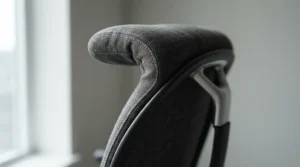
A furniture retailer’s roundup lists the Ergohuman backrest at up to 30.5 inches and names it the best mesh option among high-back chairs, even noting it could have won a lumbar-support slot too. Those two credentials together are rare, since breathable mesh and strong lumbar contouring don’t always coexist.
The practical meaning: a back that tall clears the shoulder blades of most tall users, and mesh keeps airflow moving against a long, sweaty spine in July. The headrest variant extends that support to the neck, which matters most when you lean back to read or think.
Here’s where it earns its premium tier. Tall buyers who’ve been burned by chairs with tall backs but cheap mechanisms tend to appreciate adjustment quality, though I couldn’t confirm an aggregate star rating, so weigh this as editorial opinion rather than crowd verdict. Weight rating varies by configuration, so verify before buying.
Pros:
- ✅ Tall 30.5-inch backrest reaches long torsos
- ✅ Mesh breathes through long days
- ✅ Strong lumbar reputation
Cons:
- ❌ Premium pricing stretches many budgets
- ❌ Capacity varies by configuration, so verify
Price: premium tier, check current price. Worth it if you sit for most of your waking day.
7. Humanscale Freedom with Headrest — 32-inch back for the all-in buyer
No other chair on this list looks like the Humanscale Freedom, which is either a selling point or a deal-breaker depending on your taste. The same retailer’s roundup describes high-end build quality and a backrest up to 32 inches with the headrest, tied for the tallest in its comparison, and crowns it best for lumbar support.
That 32-inch back is the point. For six-foot-four and up, extra backrest is the difference between “supported to the shoulders” and “supported to the neck.” Combined with a reputation for lumbar contouring, it addresses the two spots tall sitters complain about most.
The honest caveat is cost. This sits in a different financial universe than the budget picks, and the upgrade is mostly about build and long-term refinement rather than raw spec count. Verify capacity for your configuration.
I couldn’t confirm a verified aggregate rating, so my recommendation rests on the spec data and editorial assessment, not crowd numbers.
Pros:
- ✅ Backrest reaches up to 32 inches
- ✅ Reputation for excellent lumbar support
- ✅ High-end build quality
Cons:
- ❌ Premium pricing, typically well above $1,000
- ❌ Distinctive look isn’t for everyone
Price: premium tier, generally north of $1,000 at the time of research; check current price. A long-term investment, not an impulse buy.
How to Set Up Your New Chair in 15 Minutes (and Avoid First-Month Mistakes)
Buying a good chair and adjusting it badly is like buying running shoes and wearing them on the wrong feet. Here’s a quick sequence that works for most tall frames.
- Start with seat height. Sit all the way back and lower or raise the seat until your feet rest flat on the floor with your thighs roughly parallel to it. Tall users often discover they were sitting too low for years.
- Set seat depth if the chair allows it. You want a couple of finger-widths between the seat edge and the back of your knees.
- Position lumbar support. Move it until the curve nestles into your lower back at about beltline level.
- Adjust the headrest last. It should cradle the back of your head when you recline, not shove your chin toward your chest.
- Match the armrests to your desk. Elbows near your sides, shoulders relaxed.
For context on posture targets, Duke’s computer workstation standards reference the ANSI/HFES 100-2007 standard, a handy benchmark if you want to check your setup against something official. OSHA’s guidance also describes a reclined working posture with the torso roughly 105-120 degrees from the thighs, which is a good angle to remember when you use the tilt.
First-30-days mistakes to dodge: cranking recline tension too loose, ignoring the headrest because it feels odd for the first week, and skipping a monthly check of bolts and casters. A quick tightening session every month keeps the wobble at bay.

Real-World Scenarios: Three Tall Buyers, Three Chairs
Specs only become useful when they meet a life. Here are three hypothetical profiles matched to the picks above.
The 6’3″ grad student on a tight budget. Small apartment, a desk that doubles as a dining table, six hours a day. The GABRYLLY makes sense: flip-up arms tuck the chair away, and the budget fits a student loan reality. If gaming happens at the same desk, the GTPLAYER adds recline and a footrest.
The 6’5″ remote developer working ten-hour days. Home office, long sessions, an actual chair budget. Here the Ergohuman or Humanscale Freedom earns its keep. A 30-plus-inch back and strong lumbar support matter most when you’re seated for most of your waking hours.
The 6’4″, 300-plus-pound manager in a shared office. Heavier frame, a mix of desk work and meetings. The Flash Furniture HERCULES GO2078 and its 500-pound rating fit, and the fixed headrest is a reasonable trade for a commercial-grade frame.
In all three cases, the lesson is the same: match the chair to your torso length, thigh length, and weight, not to the label “tall-friendly.”
Problem → Solution Guide: Fixing the Most Common Tall-Person Chair Complaints
Problem 1: Your knees sit higher than your hips. Raise the seat to the top of its range, or choose a chair with a taller gas lift. If you’re maxed out, consider a model with a wider seat-height range.
Problem 2: The headrest hits mid-neck instead of your head. An adjustable headrest solves this. The CAPOT and SIHOO M18 both list adjustable headrests. A fixed integrated headrest like the Flash Furniture HERCULES GO2078 only works if the extended back happens to line up with you.
Problem 3: The seat edge digs behind your knees. That’s a seat-depth problem. Check the listed depth, and be cautious of shallow seats like the 17.9-inch SIHOO M18 if your thighs are long.
Problem 4: You slide forward and slouch by afternoon. Re-seat yourself fully against the backrest, reset the lumbar, and use the tilt lock on the GABRYLLY to hold a supportive angle during focused work.
Problem 5: Your neck craves a break during video calls. Recline slightly and let the headrest take the head’s weight. The GTPLAYER‘s 150° recline and footrest handle this well.
✨ Don’t Miss These Top Picks!
🔍 Take your seating setup to the next level with these carefully selected chairs. Click any highlighted item to check current pricing and availability. A chair that fits properly can make every workday feel better! 💺
How to Choose a High Back Chair With Headrest for Tall People
Follow these steps in order. Each narrows the field faster than browsing ever could.
- Measure your seated torso. Sit on a firm chair and measure from the seat to the top of your shoulders. This tells you how tall the backrest needs to be.
- Check the backrest height. Aim for a back that clears your shoulder blades. For headrest chairs, make sure the head support can rise high enough for you.
- Verify seat depth. Long thighs need deeper seats. If a spec sheet omits depth, that’s a red flag.
- Confirm the seat-height range. Look for a listed maximum that places your feet flat when your knees sit level with your hips.
- Match weight capacity to your frame. A rating above your weight leaves margin for a longer service life.
- Choose adjustability that you’ll use. An adjustable headrest and lumbar beat flashy extras you’ll never touch.
- Read the three-star reviews. They’re where honest trade-offs live.
Do this and you’ll eliminate most of the wrong chairs before looking at a single price.
Backrest Height: The Spec That Separates Tall-Friendly Chairs From Pretenders
Backrest height sounds boring, but it’s the spec that matters most for this entire category. Ergonomic purchasing guidance notes that a high backrest should extend above the top of the user’s shoulder blades. For a tall sitter, that rules out a surprising number of chairs marketed as “high back.”
Context helps. One ANSI-based reference puts the minimum backrest at about 17.7 inches above the compressed seat pan, a number designed around average bodies, not tall ones. Compare that with the listed figures here: roughly 30.31 inches for the GTPLAYER, up to 30.5 inches for the Ergohuman, and up to 32 inches for the Humanscale Freedom. The Autonomous ErgoChair Core lists a 23-inch back, which shows how wide the spread can be even among chairs called tall-friendly.
One warning: manufacturers measure backrest height from different reference points, so compare listings carefully. A published number might measure from the seat, the floor, or the top of the headrest. When in doubt, check the dimension diagram before trusting a headline figure.
Upper Back Support: Where Tall Chairs Earn Their Keep
Lumbar support gets all the marketing, but upper back support is where tall sitters notice the biggest gap. When the backrest ends below your shoulder blades, your upper spine floats unsupported and your shoulders round forward. The cure is a tall back that continues the chair’s curve upward instead of stopping abruptly.
Different designs achieve this differently. A tall mesh back like the Ergohuman lets airflow and gentle flex follow your spine. A padded high back like the GTPLAYER offers a more cushioned, continuous surface. The extended upper back on the Flash Furniture HERCULES GO2078 builds support directly into a thick, padded structure.
A practical test is to lean back and ask whether you feel the backrest all the way between your shoulder blades. If your shoulders sit in front of the chair, you need more height. If the upper back contact feels pressured in one hard spot, the shape may not match your spine.
Upper back support also depends on the headrest working in concert. A headrest that tilts you forward fights the very curve the backrest creates.

Adjustable Seat Height Range: How Much Do You Really Need?
Seat height is the quiet dealbreaker for long legs. According to UPLIFT Desk’s chair-height breakdown, standard office chair seat heights run about 16 to 21 inches, while OSHA recommends a seat that adjusts from roughly 15 to 22 inches to serve a wider range of users.
The problem for tall people is that “standard” tops out low. If your lower legs are long, a chair that stops at 21 inches may leave your knees above your hips, tilting your pelvis backward and flattening your lower back. For reference, the Autonomous ErgoChair Core lists an 18-23 inch range, which shows what a tall-friendly adjustable seat height range looks like on paper.
What to look for:
- A high upper limit. The maximum matters more than the minimum.
- Gas lift class. Some listings advertise longer-stroke gas lifts for extra range.
- A desk that cooperates. A taller chair needs a taller desk or a keyboard tray, or your elbows drift upward.
A quick sanity check is to stand beside the chair, pretend it’s your knee, and see whether the seat reaches roughly knee height.
High Back Chair for Long Work Hours: What Changes After Hour Six
A chair that feels fine for an hour can feel hostile at hour six. For a high back chair for long work hours, the stakes shift from “does it fit?” to “does it let me move?”
Three things matter more as the day stretches. First, micro-movement. Chairs with a free-floating tilt, like the CAPOT with its three-level tilt backrest, let you shift posture without standing. Second, temperature. Mesh models like the GABRYLLY and SIHOO M18 move heat away from the back, while fabric chairs like the Flash Furniture HERCULES GO2078 hold more warmth. Third, recline variety. The 150-degree recline on the GTPLAYER lets you change positions entirely.
No chair eliminates the need to stand. The best seat in the world is still a seat. Set a timer, stand every 30 to 45 minutes, and use the headrest during phone calls or reading breaks instead of while typing.
The takeaway: for long days, prioritize adjustability and breathability over padding thickness. Squishy feels great for ten minutes and tiring after three hours.
Tall Ergonomic Chair With Extended Backrest vs. Standard High Back Chair
Not every “high back” is created equal. A standard high back usually reaches mid-shoulder, while a tall ergonomic chair with extended backrest keeps going toward the neck and head. Here’s how the options compare.
| Chair Type | Backrest Coverage | Neck Support | Best For |
|---|---|---|---|
| Standard mid-back chair | Lower to mid back | None | Short sessions, shorter users |
| Standard high back, no headrest | Up to shoulder blades | None | Average-height users |
| Tall ergonomic chair with extended backrest and headrest (Ergohuman, Humanscale Freedom) | Full spine plus head | Yes | Tall users, long sessions |
| Big-and-tall executive chair (Flash Furniture HERCULES GO2078) | Extended padded back | Integrated | Heavier tall sitters |
| Gaming-style tall chair (GTPLAYER) | Very tall, cushioned | Pillow-style | Tall hybrid work/play users |
The table highlights a point worth underlining. A standard high back feels fine until you lean back, then leaves your head hanging. Chairs with extended backs and headrests, such as the Ergohuman and Humanscale Freedom, are built around a longer spine, not an average one.
If you only sit upright and rarely recline, a standard high back might suffice. But if you lean back at all, the extra height and head support stop being a luxury and become the point.
Price Range and Long-Term Value: What Your Money Actually Buys
Price tiers tell a story about trade-offs, not just numbers. Here’s a rough framework, with ranges only because prices change.
| Tier | Approx. Range* | Example Picks | What You Gain | Best For |
|---|---|---|---|---|
| Budget | Roughly $150-$250 | GABRYLLY, GTPLAYER | Tall back, basic adjustability | First-time buyers |
| Mid-range | Roughly $250-$500 | SIHOO M18, Flash Furniture HERCULES GO2078, CAPOT | More adjustability, higher capacity | Daily home-office users |
| Premium | Typically $600 and up | Ergohuman, Humanscale Freedom | Build quality, longevity, tall backs | All-day sitters |
*Approximate, at the time of research; prices may vary. Check current price.
The pattern is clear. Budget chairs get you the height; mid-range adds adjustment and capacity; premium buys refinement and longevity. Divide cost by years of use and the premium picks look less scary. A chair used eight hours a day for several years costs pennies per hour, so cost-per-use favors durable choices if you can afford them.
That said, a GABRYLLY or GTPLAYER is a perfectly rational first step. Sitting properly in a good budget chair beats sitting badly in an expensive one.

FAQ
❓ How tall should the backrest be for someone over six feet?
❓ Do I need a headrest if I mostly sit upright?
❓ Can I fit a taller gas lift to get more seat height?
❓ Is a gaming chair a good office chair for tall people?
❓ What weight capacity should I look for?
Conclusion
Finding the right high back chair with headrest for tall people comes down to a handful of numbers: backrest height, seat depth, seat-height range, and weight capacity. Everything else is seasoning.
If budget is tight, the GABRYLLY and GTPLAYER deliver tall backs without the sticker shock. If you love adjustments, the CAPOT puts a lot of knobs in your hands. The SIHOO M18 suits tall buyers whose thighs match its seat depth, while the Flash Furniture HERCULES GO2078 is the pragmatic pick for heavier frames. And if you’re ready to invest, the Ergohuman and Humanscale Freedom bring the tallest backs and the most refined support.
Whatever you pick, set it up properly. A well-adjusted chair is where upper back support, a sensible seat-height range, and a back that actually fits all come together. Your spine will quietly thank you for years.
Recommended for You
- Ergonomic Chair for People With Sciatica: 7 Best Picks 2026
- Ergonomic Chair for Small Desk Home Office: 7 Best Picks 2026
- Breathable Mesh Office Chair for Hot Sleepers: 7 Best Picks 2026
Disclaimer: This article contains affiliate links. As an Amazon Associate, I earn from qualifying purchases. If you purchase products through these links, we may earn a small commission at no additional cost to you.
✨ Found this helpful? Share it with your friends! 💬🤗
